



The Real Entrepreneur Daily Life: What Nobody Shows You When Your Business Starts to Scale

There is an official narrative around entrepreneur daily life. The one featuring celebrated funding rounds on LinkedIn, triple-digit growth figures announced with pride, tight-knit teams, and decisions made with unwavering confidence. This narrative is useful for selling, for hiring, sometimes for reassuring oneself. But it bears little resemblance to what business owners actually experience — especially at the precise moment when everything becomes more complex, when the rules that worked before suddenly stop working, and when no one in their circle can truly understand what is happening.
This article is not written to discourage. It is written to name, with precision, what the entrepreneur daily life genuinely involves when a company transitions from a craft operation to an organization — when the founder must stop being the primary executor and start becoming the strategist of their own project. This shift is the most critical moment in entrepreneurship. And it is the one that receives the least attention.
Entrepreneur daily life refers to the full set of decisions, postures, and trade-offs a business owner must navigate to lead a functioning company — as opposed to the creation phase or the media-friendly narratives that only ever show its surface.
Entrepreneur daily life: the reality that success stories systematically conceal
What entrepreneurial media consistently fails to show
Entrepreneurial media has developed a precise format: interview a successful founder, mention a few obstacles overcome, highlight a saving pivot, celebrate spectacular growth. The format works because it reassures and inspires. But it operates a radical form of selection — only survivors are visible, only retrospective moments are shown, and the actual texture of everyday life never makes it to the page. The entrepreneur daily life is a difficult decision on a Tuesday morning at 8:30. It is a key employee resigning the day before a major launch. It is a cash flow crisis unfolding while commercial indicators look healthy. It is trade-offs made without complete information, without certainty, often without a single person in your immediate circle capable of truly grasping the stakes.
This absence of realistic representation is not a minor problem. It produces entrepreneurs who are poorly prepared for the operational truth of their role. It leads them to interpret every difficulty as a sign of personal failure, when it is most often a structural phenomenon inherent to growth. It also creates a silent form of isolation — because no one shows that entrepreneur daily life can be grueling, complex, and destabilizing, even when the numbers look right.
The gap between representation and operational reality
The gap between what is shown about entrepreneur daily life and what it actually is widens as the business grows. In the early stages, enthusiasm absorbs difficulties. The first years are often experienced in a kind of productive adrenaline: everything is to be built, roles are blurry but urgency is stimulating. It is when the company reaches a certain critical mass — a few employees, an established client flow, processes that must hold without the founder’s constant presence — that the nature of reality changes. The entrepreneur daily life is no longer a construction adventure. It becomes a piloting discipline. And very few entrepreneurs are prepared for it.
The loneliness of the founder as a structural given, not a personal weakness
One of the least documented realities of entrepreneur daily life is loneliness. Not social loneliness — entrepreneurs are often surrounded by people — but decisional loneliness. This form of solitude settles in gradually and intensifies with growth: the more the company develops, the less the founder can share their most sensitive decisions. They cannot always explain to their teams the financial trade-offs currently in play. They cannot confide their strategic doubts to clients. They cannot lean on family, who lack the context to understand what is at stake. This loneliness is not a character flaw. It is written into the very structure of the leadership role itself.
The entrepreneur daily life requires learning to navigate alone on questions that commit the future of the company, jobs, sometimes personal capital. This pressure is real and permanent. The entrepreneurs who manage it best are not those who ignore it or conceal it behind a posture of invulnerability. They are those who have deliberately built structured reflection spaces around themselves — mentors, peers, piloting tools — that allow them to transform solitude into clarity rather than paralysis.
Distinguishing imposed isolation from chosen solitude
An important strategic distinction must be made here. Imposed isolation is dangerous: it leads to decisions made in a vacuum, with no confrontation with reality, no counterargument, no perspective. Chosen solitude, on the other hand, is a resource. It is the moment when the founder deliberately steps back from the operational flow to think about the company’s trajectory with a wider lens. Learning to inhabit this posture — and to distinguish it from simple procrastination or withdrawal — is one of the central competencies of the entrepreneur daily life when the business starts to scale.
The founder’s identity when facing business growth
A phenomenon rarely addressed in entrepreneurship content concerns the founder’s identity. The entrepreneur daily life involves a profound transformation in one’s relationship to oneself. At the start, the founder often is the business: they handle sales, deliver the product, solve technical problems, manage accounting. Their identity and their professional activity are fused. When the business grows, this fusion becomes an obstacle. They must delegate entire portions of what they used to do — sometimes tasks they master better than anyone else on the team. They must accept that others will perform less well in the short term, so that the organization gains capacity over the long term.
This process is psychologically uncomfortable. It requires redefining the value one brings to the company — no longer through execution, but through vision, arbitration, and structuring. For many entrepreneurs, this is a form of grieving: they must relinquish the identity of the expert, the best executor, to take on that of the strategist. This transition is one of the most critical moments in the entrepreneur daily life. Those who do not make it remain permanently embedded in operations — overloaded, indispensable to everything, incapable of stepping back. Those who succeed begin to pilot an organization, rather than keeping it running through sheer personal force.
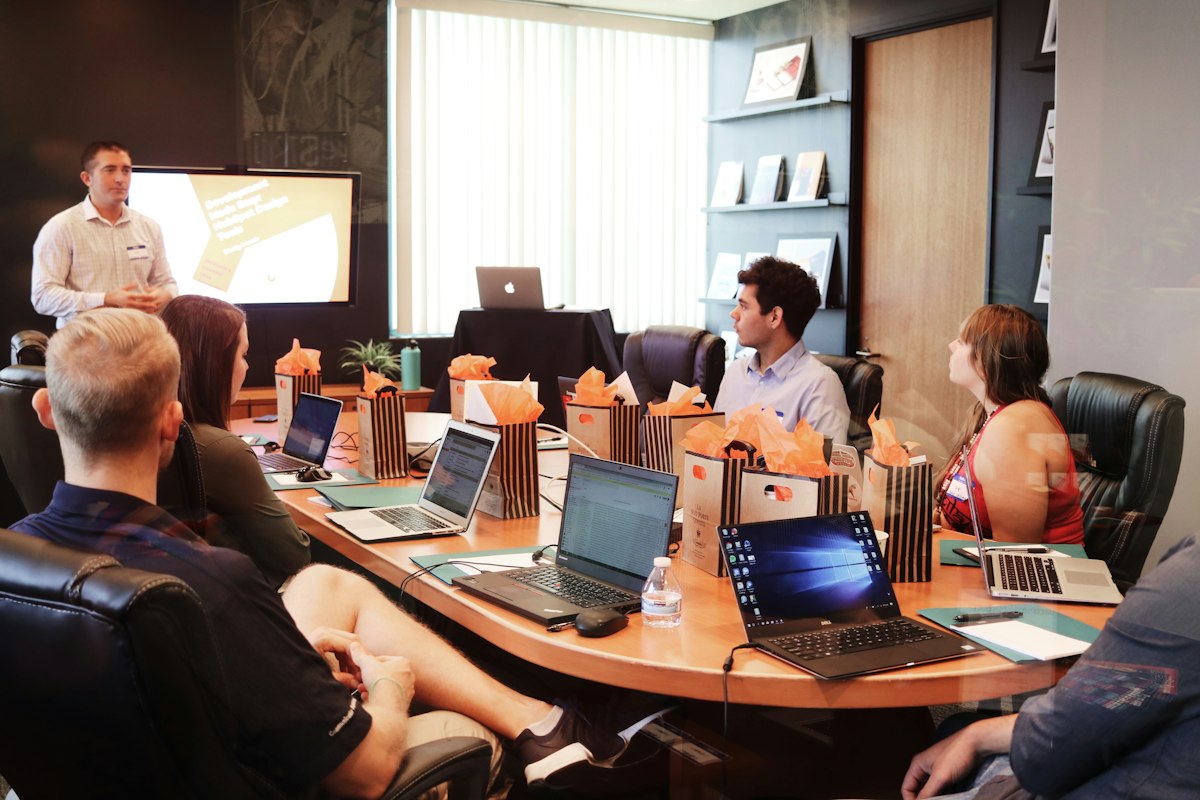
When the business grows, the entrepreneur daily life shifts entirely
The operational transition: why old reflexes stop working
Every growth stage of a business demands a re-examination of the very practices that made reaching that stage possible. This is a central paradox of the entrepreneur daily life: what worked until now becomes precisely what blocks what comes next. The founder who succeeded by being reactive, by managing everything directly, by leveraging their personal network — now faces a system that needs processes, delegation, and a form of governance they have never had to build before.
Most leaders who experience this shift misread it. They diagnose a motivation problem, a team problem, or a difficult period to push through with more effort. In reality, they are experiencing a phase transition: their personal operating model must evolve to remain suited to the growing complexity of their organization. This is not a crisis. It is a growth requirement. But if it is not clearly named, it can lead to catastrophic decisions — rushed hires, unnecessary restructurings, or abandonment of a business that was in fact on the right trajectory.
The signals that the model needs to change
There are precise signals indicating that an entrepreneur has entered this transition zone. The entrepreneur daily life becomes particularly draining when you are consistently the last to leave, when all important decisions — even operational ones — escalate to you, when you feel that without your direct involvement the company would stop, and when despite considerable working hours, results seem to plateau. These signals are not evidence of incompetence. They indicate that the organization has grown faster than the governance system steering it. This is a structural problem requiring a structural response — not additional personal effort.
Human management: what entrepreneur daily life actually demands
The human dimension is arguably the one that surprises founders most as their company develops. People often enter entrepreneurship through a passion for a craft, a market, or a technology — rarely through a passion for management. And yet, the entrepreneur daily life, once teams exist, becomes overwhelmingly a human matter. Managing personalities, expectations, conflicts, ambitions, and departures — all of this consumes a growing share of the founder’s energy.
What management textbooks do not say is that a founder’s relationship to their first employees is radically different from that of a classical manager to their team. The founder has typically recruited people who resemble them, who share their values, who accept uncertainty. When the company grows and formalizes, these early collaborators may experience the shift toward structure as a betrayal of the original spirit. And the founder may find themselves managing not only an organization, but also the meaning that organization holds for those who are part of it. This complexity is real and consistently underestimated in how entrepreneur daily life is portrayed.
Hiring for what the company will be, not for what it currently is
One of the most frequent mistakes in the entrepreneur daily life during a growth phase is hiring to solve immediate problems rather than to build an organization capable of reaching the next level. This error is understandable: operational urgency drives rapid hires, shaped by present-moment needs. But a poor hire during a growth phase costs far more than its annual salary: it creates organizational inertia, cultural friction, and often a double workload for the founder who must manage the situation while continuing to steer the company. Hiring with a strategic view of what the organization must become is a discipline that is core to a professional entrepreneur daily life.
Financial decisions under pressure: the least romanticized aspect of entrepreneurship
The entrepreneur daily life is, to a very large extent, a succession of financial decisions made under conditions of incomplete information. Questions about cash flow management, growth financing, the right moment to invest versus consolidate — these trade-offs are constant and rarely shared. A growing entrepreneur can report significantly rising revenues while living through intense cash pressure, simply because growth consumes cash before it generates it.
This temporal gap between operational reality and financial reality is one of the most destabilizing phenomena in the entrepreneur daily life. It creates situations where everything seems to be going well commercially, while at night you lie awake thinking about the next payroll run. Most business owners do not talk about this tension. It is part of what success stories systematically omit. Yet it is one of the most formative aspects of entrepreneurship: learning to read your cash flow as a strategic piloting tool, rather than as a constraint to endure. For further resources on structuring your financial governance, the U.S. Small Business Administration offers practical frameworks specifically designed to support growing businesses through these transitions.
To go deeper on this dimension, the Entrepreneur Anonyme guides library offers concrete tools for structuring your financial piloting during growth phases.

Taking back control: entrepreneur daily life as a strategic choice
Moving from execution to strategy: the fundamental shift
There is a precise moment in every entrepreneur daily life where the nature of the work must fundamentally change. It is not an easy moment to identify from the inside — you usually only know you have crossed it in retrospect. But it is the moment when continuing to work inside the business becomes the primary obstacle to its growth. The founder is too busy producing to find time to think. They are too embedded in operations to have the distance needed to see systemic problems. They manage urgencies as they arise, never finding the time to address their root causes.
Exiting this mode of operation is not a question of delegation in the conventional sense. It is a profound transformation in how the entrepreneur conceives their role. The entrepreneur daily life of a true strategist looks far more like time spent reflecting, observing, and designing than executing. This is uncomfortable at first, because the culture of immediate productive effort is deeply embedded in the entrepreneurial world. But it is the only path for leading an organization with genuine development ambitions. See our article on how to design and adapt a business strategy for SMEs.
Strategic thinking time as investment, not luxury
A leader who does not dedicate structured time to strategic reflection is not piloting a company — they are reacting to one. This distinction is fundamental. The entrepreneur daily life must integrate, in a non-negotiable way, work sessions dedicated to design rather than execution. These moments are not wasted time — they are the highest-return investment of everything the founder does. An entrepreneur who spends two hours per week analyzing their strategic trajectory, questioning their business model assumptions, and anticipating market shifts makes structurally different decisions than one who improvises in response to a constant stream of urgencies.
Building systems so that entrepreneur daily life becomes sustainable
One of the most effective responses to the challenges of the entrepreneur daily life during growth is the deliberate construction of systems. A system, in this context, is not software or a bureaucratic procedure. It is a set of rules, routines, and mechanisms that allow the organization to operate with coherence, without requiring the founder’s constant presence at every decision point. A well-designed sales system allows a sales team to qualify, process, and close deals without the founder intervening at every step. A well-built reporting system allows the founder to understand what is happening in their company in twenty minutes, without having to ask dozens of scattered questions.
Building these systems is a strategist’s work, not an operator’s work. This is precisely why most entrepreneurs postpone it: they are too caught in the urgent to invest in what is structurally important. Yet the entrepreneur daily life only becomes truly sustainable — and the business only becomes truly scalable — when these systems exist and are operational. The Entrepreneur Anonyme simulation toolkit provides modeling frameworks to evaluate the impact of organizational choices on profitability and growth capacity.
An entrepreneur without systems works for their business. An entrepreneur who has built them makes their business work for them. This difference determines the quality of their entrepreneur daily life — and the long-term trajectory of their company.
What leading rather than doing actually looks like in practice
Leading rather than doing means, concretely: spending time analyzing indicators rather than resolving the incidents they reveal; investing in developing your managers rather than in your own technical expertise; defining clear decision criteria rather than ruling case by case; and creating conditions in which the team can progress rather than compensating for its gaps. This shift in posture is difficult, uncomfortable, and often misunderstood by the founder’s immediate circle. It is nonetheless the most important transformation a founder can make in the life of their business.
The entrepreneur daily life over the long term: endurance, clarity, renewal
The temporal dimension of entrepreneurship is deeply underestimated in dominant narratives. We speak of growth, success, and obstacles overcome — but rarely of duration. Sustaining yourself over ten, fifteen, twenty years at the head of a company in permanent construction requires resources that are not purely strategic or financial. They are also personal, relational, and psychological. The entrepreneur daily life, over the long term, is a discipline of endurance as much as it is a discipline of competence.
The entrepreneurs who last are not necessarily the most brilliant or the most ambitious. They are the ones who have learned to renew themselves: to change posture when circumstances demand it, to accept unlearning what worked yesterday in order to learn what today requires, to find sources of meaning that do not depend exclusively on financial results. This capacity for renewal is probably the rarest and most valuable competency in the entrepreneur daily life. It cannot be taught directly, but it can be cultivated — particularly through regular exposure to demanding reflection on what you are doing, why you are doing it, and how you are doing it. This is precisely what the Entrepreneur Anonyme ecosystem is designed to support.
For a deeper understanding of sustainable business models and organizational transitions, the Harvard Business Review regularly publishes in-depth case analyses on companies navigating growth-stage transitions. These resources form a serious complement to any effort to develop genuine strategic competency.

Conclusion: entrepreneur daily life is a discipline, not a state
The entrepreneur daily life, as it is actually lived when the business grows, bears no resemblance to dominant representations. It is made of decisional solitude, uncomfortable identity transitions, silent financial pressures, and complex human trade-offs. It demands a capacity for self-transformation that is at least as strong as the capacity to transform the organization itself.
What distinguishes entrepreneurs who successfully navigate these phases is not a particular talent, nor exceptional luck. It is clarity about what their role must be at each stage — and the discipline to hold to it even when urgency pushes them back toward old reflexes. The entrepreneur daily life is not an adventure you endure. It is a discipline you choose, structure, and refine over time.
To go further in building your strategic posture, explore the Entrepreneur Anonyme guides and checklists, designed for business owners who want to lead with method rather than improvise under pressure.
Frequently asked questions about entrepreneur daily life
↓
Growth forces a transformation in the founder’s role: from primary executor, they must become strategist and organizational architect. This shift is counter-intuitive because it requires delegating what you master best, building systems rather than doing, and accepting a loss of direct control over operations. Without this transformation, the entrepreneur becomes the primary bottleneck of their own business — and no amount of extra effort can compensate for a structural misalignment between the founder’s role and the company’s actual needs.
↓
Decisional loneliness is a structural feature of the leadership role, not a personal weakness. It is managed by building structured reflection spaces: a peer network, regular sessions with a mentor, piloting tools that objectify decisions. Chosen solitude — deliberate withdrawal for deep thinking — is a strategic resource. Imposed isolation, which leads to deciding in a vacuum without counterargument or perspective, is the real danger. The distinction between the two is something every founder must learn to make.
↓
The most reliable signal is this: when you are indispensable to every significant decision in your company, and this indispensability prevents you from gaining strategic perspective. That is the moment when structured delegation and system-building become an absolute priority — not because you cannot do it, but because your value-add now lies elsewhere. The entrepreneur daily life changes character at this point, from personal performance to organizational design.
↓
The reconciliation happens through the separation of time horizons in your piloting practice. Cash flow is an operational indicator that must be monitored rigorously on the short term. Strategic vision operates on an 18-to-36-month horizon. These two levels are not managed with the same tools or the same posture. An entrepreneur who conflates them ends up sacrificing the long term to every short-term urgency — which is the precise definition of reactive management, as opposed to strategic leadership.
↓
The capacity to renew oneself. Knowing how to unlearn what worked yesterday, accepting being a beginner on new subjects, and questioning your own certainties when the company enters a new phase. The entrepreneurs who last are not those who are never wrong — they are those who quickly detect when their operating model is no longer adapted, and who have the discipline to change it. This capacity for self-renewal is rarely taught, but it is what ultimately separates the founders who endure from those who plateau.